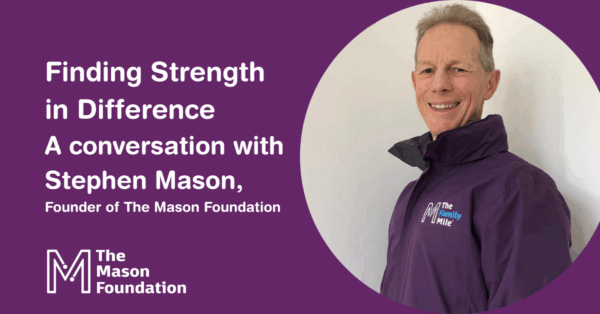
Stephen Mason, founder of The Mason Foundation, has built successful businesses and created life-changing opportunities for neurodivergent young people. Living with dyslexia and a physical disability, he shares his journey, insights on inclusion, and advice for young people navigating learning differences.
Q: Your journey hasn’t been a straight line, living with dyslexia and leaving school with no qualifications. What gave you the determination to keep moving forward?
Stephen Mason: Determination came from two places: my parents and school. My parents encouraged me to push forward, no matter what “success” looked like; academic, financial, or even running a mile. But school gave me the resolve to succeed.
I struggled academically, but I found ways to shine in sport: rugby, tennis, swimming, even at county level. That recognition showed me I could succeed and taught me that success doesn’t have to look the same for everyone; it’s about finding your strengths and building on them.
Q: For young people with dyslexia or learning differences, school can feel like a place of constant struggle. What message would you share about confidence and redefining success?
Stephen Mason: School is a stage in life. I hated it – every day felt like a battle. But once you leave, you discover freedom to explore your strengths. Identify what you’re good at, manage the areas that are difficult, and focus on what brings you happiness and success.
You might struggle with reading or writing, but you could excel in sport, creativity, or business. The upside will look after itself if you keep moving forward.
Q: How did your dyslexia shape the way you think as an entrepreneur and problem solver?
Stephen Mason: Dyslexia pushed me to find alternative ways to get things done. Early in my career, writing an email could take a whole day, so I learned to be blunt, concise, and strategic.
I surround myself with people who complement my strengths. Some anticipate problems before I even notice them; others handle client relationships and paperwork. I focus on what I do best: making things happen and driving results. That’s how successful teams work: everyone brings something different.
Dyslexia also taught me to problem-solve creatively, explore technology, and focus in areas where I knew I could deliver impact.
Q: The Mason Foundation champions inclusion and opportunity. What does inclusion mean to you, and how does it change lives?
Stephen Mason: Inclusion means removing labels and levelling the playing field. Too often, terms like “disabled” or “SEN” are misunderstood, and people focus on what someone can’t do rather than what they can. Difference isn’t a problem, it’s an asset. True inclusion is about recognising that everyone has unique strengths and needs, and then giving people the tools, support, and opportunities to participate fully.
It’s not about lowering expectations, it’s about fairness. When you provide the right support, people can thrive, whether that’s in school, sport, or the workplace.
Inclusion changes lives because it opens doors, builds confidence, and shows people that their differences are valuable. It’s about giving people the same opportunity to succeed as anyone else, and once the playing field is level, they can focus on their potential instead of their limitations. When we get this right, individuals flourish, communities benefit, and society becomes stronger for it.
Q: Propel supports young neurodivergent people to access employment. What needs to change in how employers nurture neurodiverse talent?
Stephen Mason: It’s about understanding difference. Neurodivergent people may communicate or work differently, that’s not a problem, it’s an asset.
Difference should be celebrated, not ironed out. at least 15% of people are neurodivergent. If we support young people and prepare employers for that reality, talent shines through.
Q: Many people assume there’s only one path to success. How has your story challenged that idea?
Stephen Mason: Success isn’t linear. It’s not just good grades or a corporate job, it’s knowing your strengths and going after them. For me, that was sales. I learned that success comes from spotting gaps, fixing problems, and applying determination.
Q: You’ve achieved so much in business and philanthropy. What drives your passion for giving back?
Stephen Mason: Don’t be what you’re not. Success isn’t about recognition – it’s about impact. I want to create opportunities that outlast me, where others can thrive long after I’m gone. That’s the true measure of success: the ripple effect of empowering others.
Q: Finally, for young people with learning differences who feel uncertain about the future, what advice would you give?
Stephen Mason: Recognise your differences, find what makes you happy, and go for it. To me, real success is seeing someone in meaningful employment because of the support and opportunities you’ve helped create. Once you’ve achieved something, pay it forward. Share your story and make it easier for those coming after you.
Stephen Mason’s journey reminds us that success isn’t about fitting a standard and masking who you are – it’s about embracing difference, finding your strengths, and using them to create impact. His advice is clear: resilience, focus, and inclusion are not just values; they’re tools for changing lives.